
You send a parcel. The label says 7kg. Two days later, an invoice lands for double that, because your box was “0.2cm” over its declared size. That single fraction of a centimetre just cost $120. This isn’t a rare glitch. It’s called a dimensional weight surcharge, and it happens to Australian businesses every day. Sydney shippers we work with at Norwest Logistic Management see it most on bulky, lightweight freight, the kind that takes up truck space without weighing much. Here’s what’s actually going on, why disputing it alone rarely works, and how a freight broker fights it on your behalf.
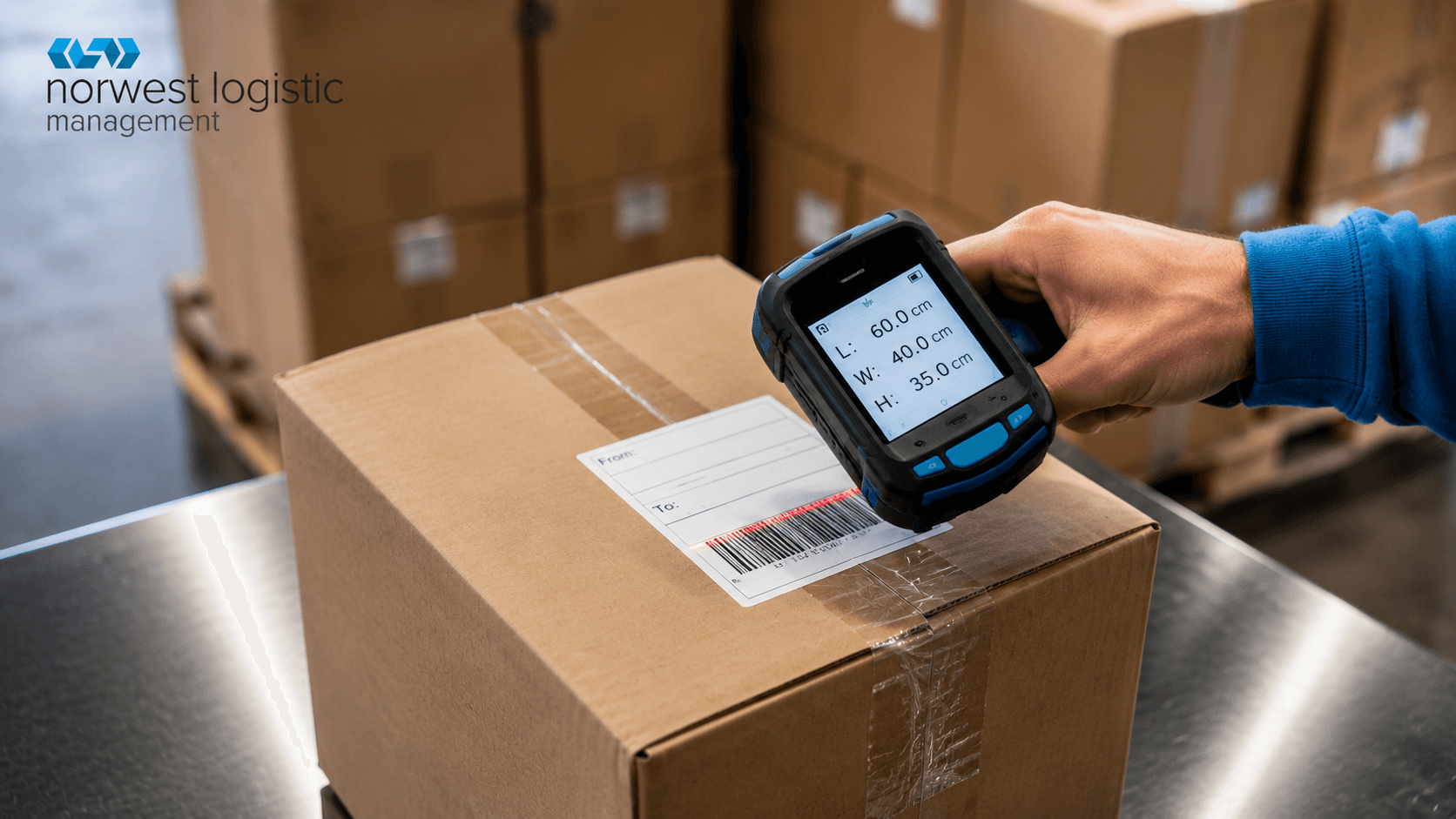
What Is Dimensional Weight? (And Why It Costs More Than the Scale Says)
Dimensional weight also called volumetric or cubic weight, is a pricing method carriers use to charge for the space a parcel takes up, not just how much it weighs. Every shipment has two weights: dead weight (what it weighs on a scale) and cubic weight (a calculated weight based on its size). Carriers charge whichever is higher. That combined figure is called the chargeable weight. In Australia, the standard conversion is 1 cubic metre = 250kg for general freight. So a box measuring 90cm x 40cm x 15cm works out to 0.054 cubic metres. At the standard 250kg factor, that’s a cubic weight of 13.5kg even if the box only weighs 5kg on the scale. The carrier bills the higher number. Oversized, “non-conforming” freight anything bulky, loose, strapped, or over 1.2 metres is often cubed at an even steeper 333kg-per-cubic-metre rate. That’s why a large, light item can cost far more to ship than a small, heavy one.
How the $120 Surcharge Actually Happens
Reweigh and reclass surcharges are triggered when a parcel’s scanned weight or dimensions don’t match what was declared at booking and Australian carriers now catch this automatically. Most major carriers run automated DIM scanning systems at their depots. Every parcel gets measured on the way through, whether it’s 20cm out or 0.2cm out. If the scanned size is bigger than what was declared, the system recalculates the chargeable weight and the invoice updates sometimes stacking on a tail-lift or manual handling surcharge if the parcel also needed special handling. The frustrating part isn’t that the system exists. It’s that a genuinely tiny discrepancy a bit of packing tape, a slightly compressed box remeasured after transit can trigger a full reclass at the higher “non-conforming” rate, turning a small measuring error into a three-figure bill.
Why Disputing a DIM Surcharge Alone Rarely Works
A shipper disputing a surcharge directly with the carrier is negotiating against the same company that wrote the terms and conditions, scanned the parcel, and issued the invoice with no independent referee in the middle. Australia doesn’t have a dedicated freight or courier ombudsman the way some other industries do. The Commonwealth Ombudsman can investigate complaints about Australia Post and StarTrack specifically, but most private couriers and freight carriers fall outside that scope entirely. Small businesses can raise a dispute with the Australian Small Business and Family Enterprise Ombudsman (ASBFEO), and the Australian Competition and Consumer Commission (ACCC) oversees fair trading generally but neither will re-measure your box for you. That leaves the shipper holding photos, a consignment note, and a polite email, against a carrier’s own scanning data and its own terms and conditions. Even with solid evidence, disputes routinely take weeks, and the carrier has little incentive to move fast.
How Norwest Logistic Management Fights These Disputes For Clients
This is where a freight broker earns its fee not just booking freight, but standing between you and the carrier when the invoice doesn’t match what actually shipped. At NLM, that looks like:
- Auditing every freight invoice against the original booking cubic weight, declared dimensions, and surcharges are checked line by line, not accepted on trust.
- Holding dispatch-time evidence accurate measurements and photos taken before the parcel leaves, so a “0.2cm” claim can be challenged with real numbers, not memory.
- Using multi-carrier leverage because we route freight across several carriers rather than one, a carrier that’s slow or unreasonable on a dispute risks losing volume, which changes how quickly they respond.
- Knowing which surcharges are legitimate and which aren’t reweigh and reclass charges are a normal, legitimate part of freight pricing when the measurements are genuinely wrong. The problem is charges applied on marginal, disputable measurements and that distinction is exactly what gets missed when a business handles it alone.
[NLM: swap in a real result here e.g. “we recovered $X in wrongly-applied surcharges for a Western Sydney client last quarter.” A genuine number will do more for credibility than anything else on this page. Replace or delete this note before publishing.]
How to Protect Your Business From Dimensional Weight Surcharges
The best dispute is the one you never have to have most DIM surcharges are preventable with three habits.
- Measure and photograph every non-standard parcel before it ships. Compressed packing tape and rounded corners can add centimetres a scanner will catch.
- Understand your freight class before you book. If your item is bulky, loose, or over 1.2 metres, expect the 333kg-per-cubic-metre “non-conforming” rate factor it into your quote comparison up front, not after the invoice.
- Get your freight invoices audited, not just paid. A freight broker checking every invoice against the booking catches reweigh and reclass errors before they become a pattern across hundreds of shipments a month.
FAQ
What is dimensional weight in freight shipping? Dimensional weight (also called cubic or volumetric weight) is a pricing method based on a parcel’s size, not just its actual weight. Carriers charge whichever is higher. What's the standard cubic weight formula in Australia? Most Australian carriers use 1 cubic metre = 250kg for general freight, and 333kg per cubic metre for oversized or “non-conforming” freight. Can you dispute a dimensional weight surcharge? Yes but success depends on having your own measurements and photos taken before dispatch. Without independent evidence, you’re disputing the carrier’s own scan data on their own terms. Is there an ombudsman for freight or courier complaints in Australia? Only a partial one. The Commonwealth Ombudsman covers Australia Post and StarTrack specifically. Most other couriers and freight carriers aren’t covered by a dedicated industry ombudsman, though ASBFEO and the ACCC handle broader small business and consumer issues. Why does a freight broker help with surcharge disputes? A broker audits invoices against bookings, holds dispatch-time evidence, and has leverage across multiple carriers all things an individual shipper disputing a single invoice alone doesn’t have.
Conclusion
A $120 bill over 0.2cm feels absurd because it is, on its face but it’s the predictable result of automated scanning meeting the industry’s own cubic weight rules. Understanding how chargeable weight actually works is the first defence. Having someone audit every invoice and hold the evidence is the second and that’s the part most businesses don’t have time to do themselves. If dimensional weight surcharges are eating into your freight budget, talk to NLM about a freight invoice audit.